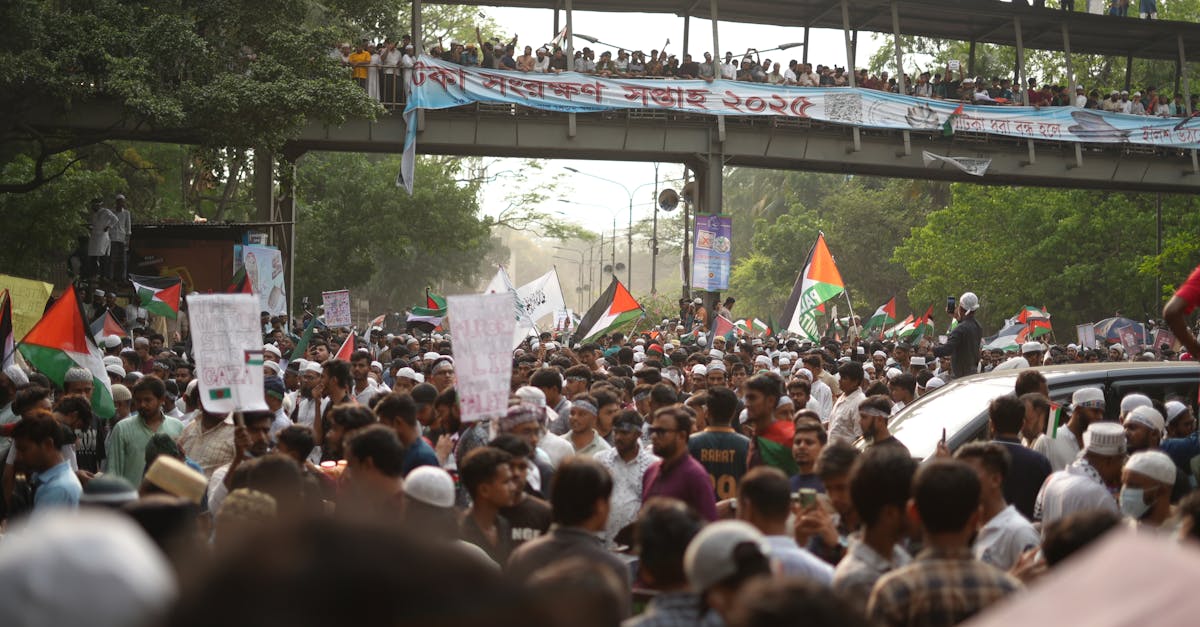
Photo by Monirul Islam
The Public Is No Longer Just Watching Teacher Protests — It’s Joining Them
Teacher protests used to be framed as labor disputes: pay, pensions, classroom sizes, broken promises. That picture is changing fast. Across the United States, public support for educators has become louder, more organized, and more visible than at any point in recent memory. Parents, students, researchers, and even local business owners are increasingly treating teacher protests not as disruptions, but as a demand for a functioning public system.
The shift matters because it changes the political math. When teachers walk out now, they are not just pressing school districts. They are forcing a broader conversation about education funding, working conditions, and the long-term health of communities. And unlike older cycles of protest, these movements are unfolding under the scrutiny of a connected public, where social media, neighborhood networks, and rapid-response organizing can turn a local dispute into a national story in hours.
Teacher protests are no longer being judged only by how inconvenient they are; they are being judged by how necessary they are.
Why Support for Teachers Is Growing
A big reason for the change is that more people are seeing the same pressures teachers see every day. Parents know when classes are understaffed. Students know when substitute coverage becomes routine. Researchers can quantify burnout, turnover, and learning loss. Those realities have made teacher protests easier to understand and harder to dismiss.
Several forces are driving this wave of sympathy:
- Persistent understaffing in schools
- Rising workloads tied to testing, paperwork, and behavioral demands
- Stagnant pay in many districts
- Post-pandemic strain on students and educators alike
- Broader skepticism about whether public institutions are being adequately funded
In America, that public mood has translated into support for actions that once would have been controversial. Teachers are increasingly seen as frontline public workers defending a service that affects everyone.
The Science Behind the Outcry
There is also a strong scientific argument behind the protests. Education researchers have spent years documenting what happens when teachers are overworked and under-resourced. The findings are consistent: educator stress affects retention, classroom quality, and student outcomes.
Studies on teacher burnout and school climate show that when staff turnover rises, academic continuity drops. Students, especially younger children and those with disabilities, are often the first to feel the effects. Social science research also suggests that stable, well-supported teachers are linked to better attendance, stronger classroom relationships, and improved learning conditions.
That evidence has changed public debate. Protesters are not simply arguing that schools feel worse. They are pointing to a body of data showing that chronic neglect produces measurable harm. That has helped teacher activism gain traction among people who might not otherwise embrace labor actions.
America’s Protest Politics Are Changing
Teacher protests in the United States have often been treated as regional flashpoints — a strike in one state, a budget fight in another. But the pattern is becoming national. From red states to blue states, teachers are facing similar structural problems, and that common experience is helping build a more unified movement.
The legal landscape is part of the story. In some states, teachers have the right to strike and bargain collectively. In others, the rules are far more restrictive, pushing educators toward sickouts, rallies, or other forms of protest that skirt legal limits. That tension gives each movement a different shape, but the same underlying frustration.
The legal questions are significant:
- How far can public employees go when negotiations fail?
- What protections exist for educators who protest?
- When do school closures become a labor rights issue versus a public emergency?
- How should states balance strike restrictions with constitutional rights to free speech and assembly?
These questions are not abstract. They determine whether teacher protests can shift policy or are quickly shut down. They also reveal a deeper contradiction in American politics: schools are expected to do more, while the people running them often have fewer tools to demand change.
International Echoes and Shared Pressure
Although the strongest attention remains on America, teacher protests are clearly part of a broader international pattern. Educators in many countries are confronting similar pressures: inflation, staffing shortages, public-sector austerity, and mounting demands on schools. The result is a wave of global labor unrest in education, with local differences but remarkably similar grievances.
That international context matters because it shows the issue is not just about one bad district or one political cycle. It is about how modern societies value public education. Countries that invest in teachers tend to weather these crises better. Countries that treat education as a budget line to trim often see deeper instability later.
For American observers, the comparison is revealing. Teacher protests abroad have sometimes been resolved through wage increases, class-size commitments, or stronger staffing guarantees. Those examples are now informing debates in the United States, where activists and unions are increasingly looking beyond state borders for strategies that work.
What Happens Next
The big question is whether this unprecedented public support will translate into policy. Sympathy alone does not fix school budgets. But it does create political space. Once the public starts siding with teachers, elected officials have a harder time pretending the problem is temporary or exaggerated.
If the current trend holds, teacher protests may continue to reshape debates over:
- School funding
- Teacher pay and retention
- Class size limits
- Mental health support in schools
- Strike laws and public-employee rights
That is why these protests matter beyond the picket line. They are exposing a system under strain — and a public that increasingly knows it.

Article orchestrated by Mobstacker’s WP Auto Muse Pro.

This Photo was taken by Monirul Islam on Pexels.
About The Author






It’s so refreshing to see this shift! Teachers really do deserve more recognition and support, and it’s about time the public gets involved too. I remember a few years back when I saw a similar movement in my town, and honestly, it made me feel hopeful about change. Hopefully, this momentum keeps going and leads to real improvements for everyone involved.
It’s interesting to see how public perception is shifting, and maybe this new level of support can really make a difference in improving conditions for teachers. I remember when I was a student, the importance of educators was obvious but often overlooked when it came to policy decisions. Hopefully, more communities will recognize that investing in teachers isn’t just about them – it’s about the future of every student. Things might actually change if
It’s interesting to see how public perception is shifting from viewing teacher protests as mere disruptions to understanding them as vital calls for change. I recall a similar trend in the early 2000s when community members started attending school board meetings to voice support for better education funding. This kind of solidarity can really influence policymakers and bring about meaningful reform. It’s also worth noting that these protests often highlight
It’s fascinating to see how perceptions are shifting! I remember hearing about teacher strikes years ago and thinking they were just about pay. But now, seeing entire communities rallying together really underscores how much education affects everyone’s lives. It’s about quality education, fairness, and respect for the profession. Hope this momentum continues so that educators get the support they truly deserve. Do you think this level of public backing will make a lasting difference in policy changes?
Guess soon teachers will be protesting for better Wi-Fi in the staff lounge too. Next thing you know, they’ll want a raise for all the extra paper they’re printing!