
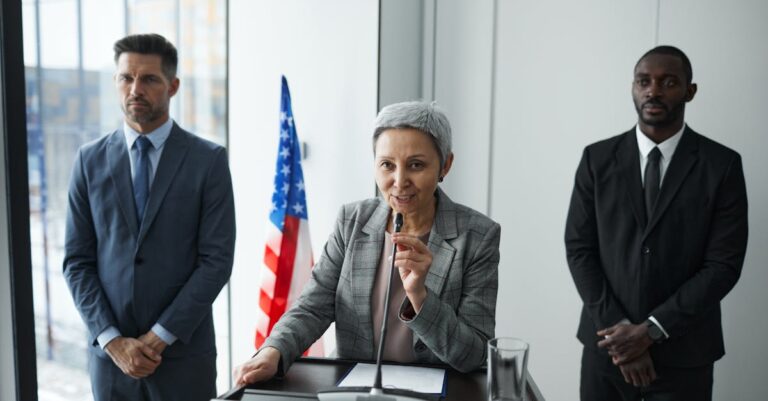
Photo by Startup Stock Photos
The Shifting Landscape of Teacher Rights in America and Beyond
In recent years, teacher rights have become a hot-button issue not only within U.S. borders but across the global landscape. From debates over curriculum control to protections against politicization, educators are fighting for a future that respects their professional autonomy, safety, and rights—especially amidst rapid societal change. As policy shifts ripple through America, international standards evolve, and even sports and science influence perceptions of education, understanding these debates is crucial.
—
Key Policy Shifts in the United States
The United States stands at a crossroads, balancing state-driven policies with national conversations about public education. Recent legislation, such as restrictive laws targeting critical race theory or mask mandates, often pits educators against political agendas. On the other hand, increasing attention is being given to teacher protections, especially amid rising concerns about teacher shortages and workplace safety.
Some notable shifts include:
- Enhanced whistleblower protections, aiming to shield teachers from retaliation when raising concerns.
- Debates over curriculum transparency, which challenge educators’ academic freedom.
- Union efforts to secure better wages and working conditions, especially in underfunded districts.
Despite these advances, many teachers remain vulnerable in volatile political climates, leading to a wider discussion about professional rights and freedoms, as explored by Teachers and the Right.
—
International Perspectives and Comparative Models
Globally, teacher rights are framed within different cultural and political contexts. For example:
- In Finland, teachers enjoy high levels of autonomy, supported by a strong national curriculum that recognizes teachers as professional experts.
- Japan emphasizes teacher stability and respect, fostering a tradition of lifelong employment.
- Conversely, many developing nations face challenging conditions, like poor salaries or inadequate protections, which undermine teachers’ ability to perform.
The international dialogue raises reflexive questions for America:
“If we want to elevate our educational standards, perhaps it’s time to look beyond national borders and consider models that prioritize teacher autonomy, respect, and continuous professional development.”
Understanding these frameworks can help shape policy debates about rights, responsibilities, and professional status of teachers in the U.S., especially as education becomes increasingly globalized.
—
The Intersection of Sport, Science, and Education Policy
Unexpected as it may seem, sport and science significantly influence public perceptions and policy decisions about teachers.
- Science is central to STEM education reforms, demanding teachers equipped with up-to-date knowledge. Yet, teacher training often lags behind rapid scientific developments, raising questions about professional development rights, as seen in resources provided by Educator Rights.
- Sport serves as a social glue, influencing youth engagement and policymakers’ support for physical education programs. High-profile athletic figures advocating for better school resources help spotlight teacher rights in physical education and coach safety.
Moreover, emerging sport science research bolsters the case for specialized teacher training, especially in injury prevention, mental health, and performance optimization—all of which necessitate legal protections and rights for educators.
“When science and sport intersect with education, they open new avenues for empowering teachers as innovators and protectors of student well-being.”
—
Charting the Path Forward
The conversation around teacher rights is far-reaching, touching upon education funding, policy advocacy, international comparisons, and interdisciplinary influences. Moving forward, key issues to watch include:
- Legal protections for educators against politicization and harassment.
- Recognition of teachers as professionals, akin to scientists or athletes who safeguard their expertise and rights.
- Global exchanges of best practices, fostering a more inclusive and secure environment for teachers worldwide.
- The necessity of amplifying teachers’ voices in policies affecting curriculum and workplace conditions.
Understanding these debates requires more than just national introspection; it demands acknowledgment of international standards and cross-disciplinary insights. Only then can future policies genuinely support teachers’ rights—ultimately enriching the quality of education for every student.
—
“As education continues to evolve, so must our commitment to safeguarding those who shape our future—teachers.”

Article orchestrated by Mobstacker’s WP Auto Muse Pro.

This Photo was taken by Startup Stock Photos on Pexels.
About The Author





The discussion surrounding teacher rights is indeed complex and multifaceted. It brings to mind the importance of balancing curricular freedom with ensuring students receive a well-rounded education. Moreover, safeguarding the safety and well-being of educators should be a priority
Oh sure, because nothing screams progress like arguing over whether teachers should have the freedom to actually teach or just follow a script written by some distant politician. Who wouldn’t want their kids’ education dictated by the latest trending political agenda, right? And let’s not forget how totally normal it is to treat educators like they’re enemies rather than essential professionals. Honestly, I’m sure all this debate just makes the classroom a super safe space for critical thinking.
It is evident that the discourse surrounding teacher rights is complex and multifaceted. While safeguarding professional autonomy and safety is undoubtedly vital, I believe we must also consider the broader societal implications, including the need for standardized educational quality and equitable access. Striking a balance between protecting individual rights and ensuring a cohesive educational framework remains a challenge, yet
It’s interesting to see how the debate around teacher rights has become so polarized lately. But I wonder if sometimes the focus on “autonomy” overlooks the importance of accountability and ensuring educational standards are maintained for all students. Maybe there’s a middle ground that respects teachers’ needs without compromising the quality of education. Also, the international aspect is complex—comparing policies across different countries seems hard given diverse cultural and political contexts.
Isn’t it wild how everywhere seems to be wrestling with similar issues? I remember back in my school days, teachers just seemed to have that unspoken respect, but now it’s like watching a chess match where the pieces keep moving. Seems like the more society changes, the more the classroom becomes a battleground for bigger ideals. Hope educators still find some room to breathe and teach without feeling like they’re walking a tightrope all the time.