
The Missing Voices in Teacher Training
A lot of teacher training sounds like it was designed by someone who has never been loudly interrupted by a seventh grader, never watched a Chromebook battery die at 9:12 a.m., and never had to explain why a novel got yanked from the shelves because somebody, somewhere, decided reading is too dangerous. That’s the problem.
Teacher training in public schools often treats students like background scenery: important, yes, but not quite important enough to invite into the room. Meanwhile, schools are trying to do more than ever — manage academic recovery, navigate politics, respond to book bans, and keep classrooms functioning in a climate where everybody has an opinion and half the opinions come with a microphone.
If training is meant to prepare educators for real schools, then it needs to stop pretending schools are neutral, tidy little laboratories. They are not. They are noisy, complicated civic ecosystems, full of children who notice everything and adults who sometimes need reminding that the people they serve are not imaginary.
Teacher Training That Skips the Main Characters
Too much professional development is built around the idea that teachers are containers to be filled with strategies, acronyms, and laminated best practices. Then Monday arrives, and the lesson falls apart because the strategy didn’t account for the actual humans in the room.
That’s where students come in.
Students are not just recipients of instruction. They are the daily test case, the real-time audit, and the most honest evaluation form a school will ever get. If teacher training doesn’t include student voice, it risks becoming a conference of experts discussing a place they only vaguely recognize.
Consider the usual training topics:
- classroom management
- literacy instruction
- trauma-informed practice
- equity and belonging
- digital citizenship
All good. All useful. But if students are never asked what helps them learn, what makes them tune out, or what feels performative versus genuine, then the training stays half-finished. It’s like assembling a desk with no instructions and then blaming the desk for wobbling.
If students aren’t part of the lesson plan, schools end up teaching around them instead of teaching with them.
That’s not reform. That’s educational fan fiction.
Schools, Politics, and the New Normal of Keeping a Straight Face
Public schools have always been political, which is a polite way of saying they sit right in the blast zone whenever adults start fighting over values, power, or what counts as “appropriate.” Teacher training cannot ignore that reality anymore. Not when curriculum decisions are being argued in board meetings, on social media, and sometimes in the grocery store aisle if you live in the wrong zip code.
In places like Nassau, educators are often asked to be calm, compliant, and endlessly adaptable while the ground keeps shifting under them. They’re expected to explain policy changes without sounding alarmed, defend library collections without sounding defensive, and teach students how to think critically while avoiding the political landmines planted all over the building.
That’s a tall order.
So why do so many training sessions still act like politics is something happening “out there,” far from the classroom? It isn’t. Politics affects:
- what books stay on shelves
- how teachers talk about history and identity
- whether educators feel protected or targeted
- how students understand whose stories matter
A teacher trying to guide discussion after a book ban is not dealing with an abstract policy issue. They’re dealing with students who have noticed that adults are angry about words on a page. And if teacher training hasn’t prepared them to handle that moment with honesty, care, and a little courage, then it has failed its job.
The Book Ban Problem: When Adults Panic and Students Pay Attention
Book bans have a special talent for revealing how nervous adults become when young people are trusted to read things. Apparently, some people think the quickest way to protect children is to remove the very stories that help them make sense of themselves and the world.
That logic is… not exactly a triumph of reason.
For teachers, book bans are more than a headlines issue. They reshape what can be taught, discussed, recommended, and defended. They turn librarians into frontline negotiators and force classroom teachers to navigate questions they never wanted to answer in a meeting that should have been about reading comprehension.
Teacher training should prepare educators for this reality in practical ways:
- How to respond when a book is challenged
- How to discuss contested texts without escalating panic
- How to support students who connect personally to banned or challenged books
- How to distinguish between professional judgment and political pressure
- How to document concerns while protecting classroom integrity
Instead, too often, educators get vague guidance wrapped in optimistic language and a PDF. That’s not support; that’s administrative mood lighting.
If students are watching adults remove books from classrooms and libraries, they are learning something whether anyone plans to teach it or not. They are learning who gets to decide what counts as knowledge, whose discomfort gets prioritized, and how power moves through a school.
Teacher training should be honest enough to say that out loud.
Put Students in the Lesson Plan Already
Here’s a radical idea: ask students.
Ask them what makes a lesson meaningful. Ask them what confuses them. Ask them whether a classroom feels welcoming or like a place where everybody is pretending not to be tired. Ask them what they notice when adults argue about what they’re allowed to read.
Students do not need to run the district. They do need to be heard.
The best teacher training would include:
- student panels
- classroom shadowing with student feedback
- lesson reflections written by students
- collaborative planning that includes youth perspectives
- training on how to listen without getting defensive every five seconds
That last one may require its own workshop.
The point is not to turn students into unpaid consultants for the entire school system. The point is to recognize that they are experts in the experience schools are trying to shape. If adults want better teaching, they should probably stop designing it without the people sitting in the desks.
A Better Model for Teacher Training
A smarter model of teacher training would treat students as partners, not props. It would acknowledge that schools are civic spaces, not sterile institutions sealed off from the community. It would prepare teachers for the realities of politics, contested curriculum, and the strange emotional theater of book bans.
And it would do so with enough humility to admit that educators don’t learn everything from other adults in a conference room at 3:15 p.m. on a Tuesday.
They learn from students. From watching what lands and what flops. From the moment a class lights up because a discussion finally feels real. From the kid who says, bluntly, “We know when you’re not listening.”
That kid should probably be in the training room.
Because if teacher training wants a reality check, the answer is simple: stop building it around everyone except the students.

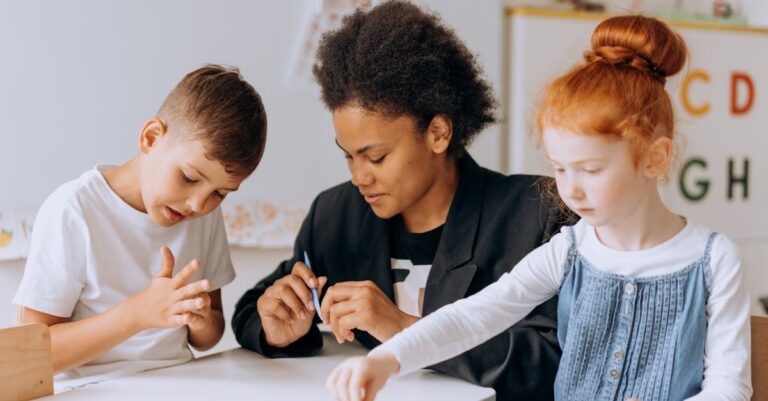
This Photo was taken by cottonbro studio on Pexels.
About The Author



Wow, this really hits home. I’ve always felt like the training I received was so *theoretical*, like they forgot to include the real chaos that happens in a classroom. I mean, a seventh grader loud enough to drown out everything? Sometimes it’s like, “Did they even see
Haha, it’s so true! I swear, sometimes I feel like teacher training is more about memorizing the teacher’s manual for a robot than actually dealing with real kids. Like, “Here’s the perfect lesson plan,” but nobody told me what to do when my class turns into a wild animal zoo at 8:59
Wow, this really hits home! Sometimes I feel like the actual chaos of a classroom isn’t really considered in how teachers are trained. Like, nothing prepares you for the random interruptions or the tech failures, let alone the emotional rollercoaster of students and the whole censorship thing. I totally agree that we need to include the real voices of teachers and students in training programs! Otherwise, it’s like teaching in a bubble where only ideal situations exist. Thanks for shedding
Wow, this hit home! I totally agree that teacher training needs a serious overhaul. Too often, it feels like new teachers are set up for failure because they’re not prepared for the real classroom chaos—like noisy tech issues or unexpected interruptions. And the part about books getting yanked? That’s so true—what message does it send to students when reading is deemed dangerous? We need to hear more voices from experienced teachers who’ve actually lived through these daily challenges. Honestly, if the training doesn’t reflect the reality, how can teachers truly succeed? It’s high time we
Haha, this is so true! I think my biggest conflict was always trying to teach kids how to read while their Chromebooks were busy dying a slow death. Also, I swear if I had a dollar for every time I had to explain why a book was “dangerous”—
Haha, wow, this hit home! I swear, sometimes I feel like my training was more about surviving a zombie apocalypse than actually teaching. And the part about the Chromebook dying at 9:12? Classic. It’s like, “Here’s your lesson plan, and good luck when the Wi-Fi ghosts come to haunt us.” Also, yanking books from shelves because of some mysterious danger