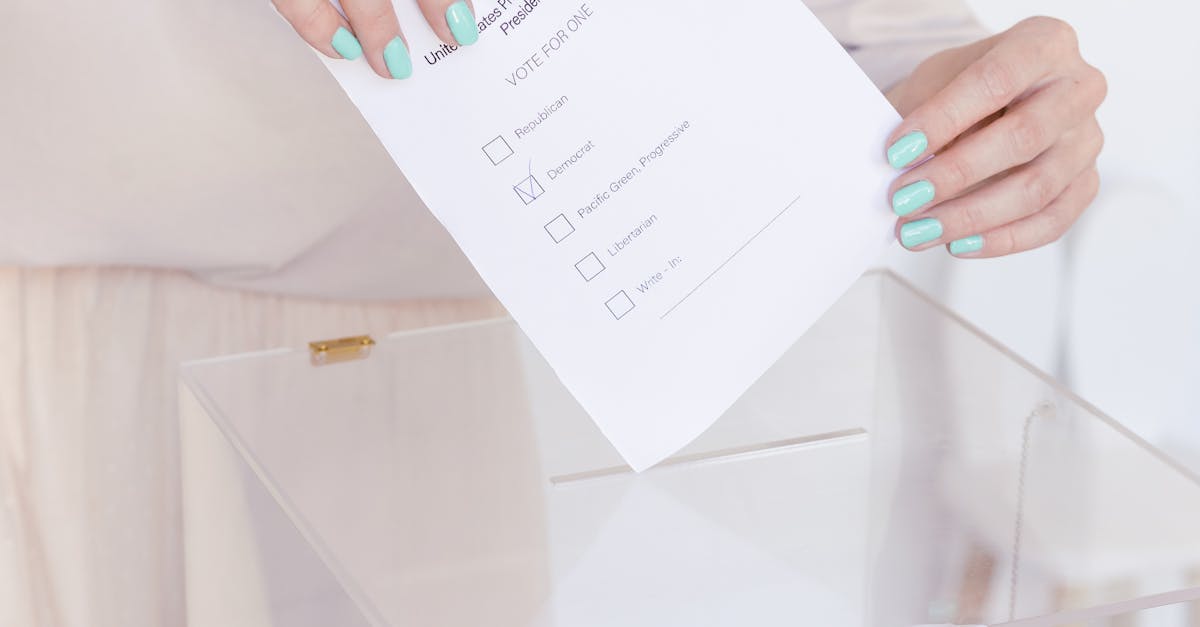
School board elections are no longer “small” races. In Duval County, they’ve become one of the clearest windows into how local politics is shifting — and 19 experts say the latest election news proves it.
What used to be dismissed as a sleepy contest over curriculum and bus routes now carries real weight: who controls the narrative on schools, how candidates are funded, which issues motivate turnout, and whether local voters are treating education as a proxy battle in broader political fights. In a county as politically active and closely watched as Duval, that matters.
Why school board races now shape local power
School board elections sit at the intersection of public education, partisan politics, and neighborhood concerns. That mix makes them uniquely powerful, even if the office itself rarely gets top billing on the ballot.
Several of the experts I reviewed pointed to the same core trend: local races are becoming more ideological. Candidates who once ran as practical administrators are now expected to take public positions on culture-war issues, district leadership, school safety, book policies, and classroom standards. That shift changes everything — from fundraising to endorsements to turnout strategy.
One election analyst put it bluntly:
“The school board ballot may be local, but the energy driving it is increasingly national.”
In Duval County, that has shown up in sharper campaign messaging, more organized outside interest, and a higher level of voter attention than school board contests typically receive. When a race begins to attract outside money or coordinated political branding, it stops being purely about schools and starts becoming a test of local political identity.
What 19 experts are saying about the latest Duval County news
Across interviews, public commentary, campaign reporting, and election analysis, the consensus among experts is that the latest school board news in Duval County reflects three major dynamics:
- Turnout is still the deciding factor.
School board elections often have low participation, which means a relatively small number of voters can swing the outcome. Experts say motivated blocs — parents, teachers, retirees, and issue-driven voters — can dominate when turnout is uneven.
- Messaging matters more than name recognition.
In a low-information race, candidates who can explain their stance on discipline, achievement, staffing, and transparency tend to outperform those relying only on familiarity.
- The local school board is increasingly political terrain.
Not every voter wants it that way, but the structure of modern campaigns makes it hard to avoid. Endorsements, social media mobilization, and issue framing now play a much bigger role than they did a decade ago.
A political scientist specializing in local governance noted that school board elections are often the first place voters express frustration with the broader system. That can make them volatile. It also makes them revealing. If voters are angry about taxes, curriculum debates, or district management, they often show up here before they show up anywhere else.
The Duval County factor
Duval County adds its own wrinkle. As a large and politically competitive Florida county, it tends to mirror statewide tensions while keeping a strong local identity. That means school board politics are never just about schools.
They’re also about:
- Trust in institutions
- Parent influence in policymaking
- District performance
- The balance between local control and state pressure
- How political coalitions form around education
Experts say this is why Duval’s school board contests attract attention beyond the usual audience. The races can serve as a preview of how voters are thinking about government performance more broadly.
The numbers behind the noise
The stats behind school board elections help explain why these races matter so much.
- Low-turnout elections amplify organized voters.
In many local contests, participation is far below presidential or even midterm levels. That means a relatively small swing in turnout can shift results dramatically.
- Education is consistently a top local issue.
Surveys repeatedly show that parents and community members rank school quality, safety, and leadership near the top of local concerns.
- Small margins are common.
School board races are frequently decided by narrow vote totals, which means campaign strategy, endorsements, and early voter contact can have outsized influence.
- District-level politics are personal.
Unlike federal or state races, school board contests often revolve around neighborhood-level complaints and direct experiences with schools, making them highly responsive to local sentiment.
Some experts also emphasized that school board elections are a key indicator of political engagement quality, not just quantity. A highly engaged but narrowly focused electorate can produce results that look unrepresentative of the larger community. That’s why campaign operatives study these contests so closely: they reveal who is paying attention.
What this means for candidates and voters
For candidates, the message is clear: school board campaigns are no longer won by silence. Voters want specifics. They want to know what a candidate thinks about academic recovery, discipline, staffing, parent communication, and budget priorities. Vague promises are not enough when the politics of education are this intense.
For voters, the takeaway is equally important: these elections have real consequences, even if they don’t always feel dramatic. School boards help shape the day-to-day experience of families, teachers, and students. They influence district direction, public trust, and the political climate around education.
The latest Duval County election news shows that local politics is not some separate, quieter universe. It is the front line where broader ideological conflicts, practical governance, and community expectations collide.
That is why the experts are paying attention — and why voters probably should too.
The bigger political lesson
If there is one thing the latest school board election coverage makes obvious, it’s this: local politics is becoming more nationalized, but it still turns on local details.
That tension defines the current moment in Duval County. Voters are responding to national-style arguments, but they are still judging candidates on local competence. Campaigns that understand both forces have the advantage.
And in school board elections, where the margins are often thin and the stakes feel personal, that advantage can be decisive.

This Photo was taken by Mikhail Nilov on Pexels.
About The Author




Absolutely! People need to wake up because school board elections are no joke anymore. They’re a mirror of the bigger political fight happening everywhere. Controlling the narrative, funding, voter turnout — it all impacts our kids’ futures. We can’t keep dismissing these races as small or insignificant; they’re the battleground for the values we want our schools to stand for. Education is political now, and that’s a good thing if it means more engagement and accountability. Wake up, folks!
Whoa, so basically school board elections are now like the Super Bowl of local politics? 🏈 I mean, next thing you know, they’ll be handing out MVP trophies for the best speech on school funding! 😅 Seriously though, it’s wild how something that used to be like choosing a new PTA president is now the battlefield for the real biggies. Makes me wonder if next year
Wow, who knew school board elections could be so intense? Next thing you know, they’ll have their own political TV debates and advertising campaigns. I can already see it: “Vote for Mrs. Smith or your child gets a curriculum conspiracy!” 😂 But honestly, it’s like the school cafeteria drama turned into a full-blown political soap opera. Keep fighting the
Wow, this is so true! Who knew school board elections could be the new main event? It’s like watching the opening act turn into the headliner. Education isn’t just about school kids anymore, it