Teachers Rarely Shout—But They Can Break a County Race
County commissioner candidates love to talk about roads, taxes, drainage, and development as if those are the only votes that matter. They are not. In Duval County, where school politics can ignite faster than a zoning dispute, teachers often hold the quiet leverage that shapes a race long after the yard signs come down.
They do not usually show up as a single bloc with matching T-shirts and a marching band. That would be too easy to dismiss. Instead, they arrive as something more dangerous to ambitious politicians: a network of exhausted professionals, parents, union organizers, retired educators, and voters who understand exactly which promises are real and which ones are theater.
And when those voters decide a candidate has insulted public schools, weaponized “reform” language, or treated education like a bargaining chip, the response is rarely loud. It is colder than that.
The loudest protest in local politics is often silence at the ballot box—and teachers are masters of it.
County Commissioner Races Are Supposed to Be Small. They Aren’t.
Commissioner elections are often marketed as low-stakes local contests. That lie benefits exactly one group: candidates who hope nobody is paying attention.
But in places like Duval County, county politics and school politics keep colliding. Commissioners may not run the school district, yet they influence the broader ecosystem around it: land use near schools, budget priorities, growth patterns, transportation, and the tone of public investment. When school overcrowding becomes a neighborhood fight, or when a commissioner dismisses educators during a funding debate, the damage spreads beyond the chamber.
Teachers notice those moments. So do parents. So do custodians, bus drivers, school support staff, and the people who have spent years watching politicians claim to “support education” while voting for policies that make classrooms harder to run.
A county commissioner can survive a bad headline. What they often cannot survive is losing the trust of the school community.
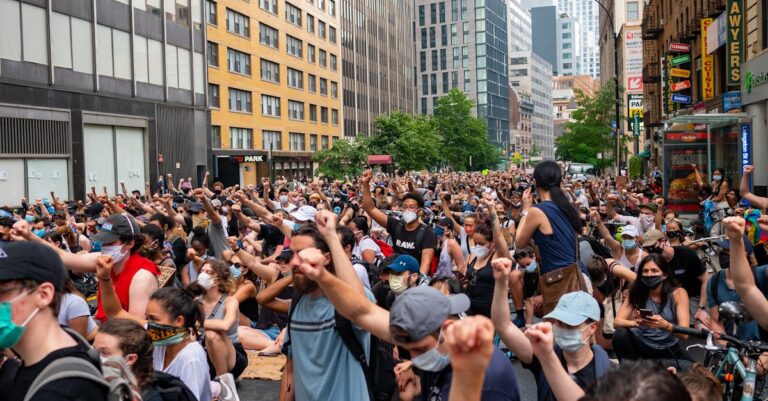
Protest in Duval County Is Not Always a March
When people hear protest, they picture signs, chants, and cameras. But in local politics, protest is often quieter and more effective.
It looks like this:
- educators attending meetings and asking precise, uncomfortable questions
- parents organizing against candidates who mock public schools
- teachers sharing voter guides through private networks
- union members donating time instead of money
- school employees refusing to legitimize a candidate with their presence
- community leaders turning endorsements into warnings
That is protest too. It is disciplined, relational, and hard to spin.
In Duval County, where public education has long been a political fault line, the school community does not need to dominate a rally to matter. It only needs to decide that a candidate is unserious, disrespectful, or hostile. After that, the candidate is no longer talking to a neutral audience. They are talking to a room full of voters who will remember every word.
The bitter truth is that many county candidates misunderstand this completely. They think teachers are passive because they are polite. They mistake patience for apathy. Then election day arrives, and the silent vote lands like a hammer.
Why Candidates Keep Getting School Politics Wrong
County commissioner hopefuls often try to split the difference on education. They praise teachers in public, nod at school safety, and promise “better partnerships” with districts they barely understand. It is political camouflage, and most educators can smell it immediately.
The usual mistakes are painfully predictable:
- Treating schools as a talking point, not a public institution
- Using vague praise instead of concrete policy positions
- Pretending growth and school capacity are separate issues
- Inviting educators to events, then ignoring them afterward
- Assuming the school vote is too fragmented to organize
That last assumption is the one that gets candidates into trouble.
Teachers are not just voters. They are communication nodes. They talk to families, coworkers, neighborhood groups, and alumni networks. They influence how problems are framed long before a campaign ever spends money on messaging. If a commissioner candidate becomes known as someone who undermines schools, the story travels fast and repeats often.
That is how local races get poisoned. Not by one explosive scandal, but by accumulated disrespect.
The Silent Vote Is the Most Punishing One
There is something especially brutal about the way teachers punish political arrogance. They do not always need to make a spectacle. They simply stop believing.
They stop volunteering.
They stop defending the candidate in conversation.
They stop taking the campaign literature seriously.
And eventually, they stop voting for the person who thought public schools were just another photo opportunity.
That is the political danger hiding in plain sight. Teachers do not have to dominate county commissioner races to shape them. They only have to move together at the margins, in enough neighborhoods, among enough families, to turn a close election into a humiliation.
In a county as politically charged as Duval, where education debates can carry the emotional weight of cultural warfare, candidates should fear the school community—not because it is loud, but because it is organized, informed, and capable of remembering every broken promise.
The tragedy is that many commissioners only discover this after the votes are counted. By then, the lesson has already been delivered.

This Photo was taken by Joshua Santos on Pexels.
About The Author