
Why the Story Wins Before the Vote Does
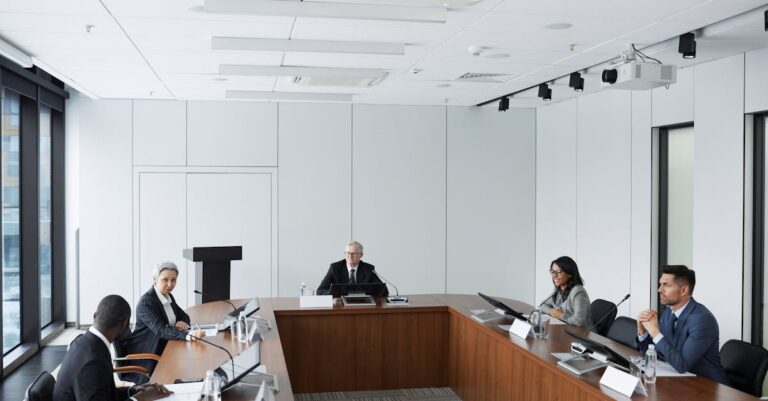
A school board meeting can look, on paper, like the least dramatic event in town. There are agendas, minutes, budget lines, and possibly a tray of cookies near the back wall. Yet somehow these meetings can turn into the most talked-about performance in the building once a good story enters the room.
That’s because people don’t remember spreadsheet columns nearly as well as they remember a child describing what it feels like to sit in a crowded classroom, or a parent explaining why a new health policy changed the rhythm of their family’s week. Facts matter. Numbers matter. But stories are what make those facts stick.
And in school board debates, where issues can range from America’s local priorities to international perspectives and health-related concerns, storytelling often becomes the shortcut to understanding. It turns abstract policy into something human.
A policy is easier to discuss. A story is easier to feel.
The American School Board Drama, Minus the Theater Curtain
School boards sit at a uniquely American crossroads. They are local, public, and deeply personal. One district may be debating library materials, another lunch programs, another mental health staffing, another safety rules. Different towns, different pressures, same basic truth: everyone thinks schools should reflect their values.
That’s why debates can get heated so quickly. A speaker doesn’t just show up to talk about textbooks or sports schedules. They show up to defend a version of childhood, community, and sometimes even the nation itself.
A strong story can cut through that noise.
Instead of saying, “We need better student support services,” a parent tells the story of a teenager who stopped showing up to class after losing a family member. Instead of citing policy language, a teacher describes what it looks like when a student quietly falls apart in the middle of a normal Tuesday. Suddenly, the debate is no longer theoretical. It has a face, a name, a heartbeat.
That’s powerful in the American school board setting because local democracy is built on the idea that ordinary people should influence ordinary institutions. Stories make that participation feel real.
Why International Examples Make Local Debates Wider
Sometimes school boards borrow ideas from outside the neighborhood. That can sound lofty, but it’s often practical. Districts look to international approaches when they want to compare school meals, mental health supports, testing practices, language programs, or safety models.
And again, stories matter.
A superintendent explaining how another country handles student wellness may be forgotten by the end of the meeting. But a short, vivid story about how a Finnish school structures the day to reduce stress, or how a Canadian district supports multilingual families, gives people something concrete to picture.
The international angle does two things:
- It reminds the room that school problems are not always unique.
- It gives local debates a wider context without making them feel remote.
That can be especially useful when the issue is tied to health. For example, if a district is considering mental health counselors, food policy changes, or restroom access rules, a story about how another school system addressed similar challenges can make the proposal feel less experimental and more grounded.
People are often skeptical of imported ideas. But they are more open when the idea arrives wearing a story.
Health Topics: Where Stories Get Personal Fast
If there’s one subject guaranteed to raise the emotional temperature in a school board meeting, it’s health.
That includes physical health, mental health, illness accommodations, nutrition, and the general question of how much responsibility schools should take for student well-being. These discussions can become tense because they touch families directly. Everyone has an opinion, and many people have a memory.
A story about a child with asthma who struggles during gym class hits differently than a policy summary about indoor air quality. A teacher describing a student panic attack during testing will often change the mood of the room faster than any statistic about adolescent anxiety. Even arguments about cafeteria food can become unexpectedly moving when someone talks about a child whose only reliable meal comes from school.
Good stories don’t replace data. They give data a human scale.
They also keep the conversation from drifting into abstract shouting. When people hear a specific experience, they’re more likely to ask, “How do we solve this?” rather than “Who’s to blame?”
The Hidden Power of the Right Story at the Right Time
A good school board story does not need to be dramatic in the movie-trailer sense. It just needs to be specific, honest, and easy to picture.
The best ones tend to have a few things in common:
- A clear person
- A student, a teacher, a parent, a bus driver, a counselor.
- A relatable problem
- Stress, safety, access, belonging, fairness, time.
- A concrete moment
- A hallway conversation, a missed lunch, a late-night homework struggle, a doctor’s note, a language barrier at pickup.
- A broader meaning
- Why this matters for the school, the community, or the district’s future.
That structure works because it mirrors how people actually think. We may pretend to care first about policy, but usually we care first about people. Then we work backward to the policy.
When a Story Becomes the Main Event
This is the secret school boards know and sometimes fear: a meeting meant to be about budgets can become a referendum on what kind of community the district wants to be.
A good story can do that. It can take an obscure issue and turn it into the main event. Not because it’s flashy, but because it’s meaningful.
The room may begin with sighs and paperwork. Then someone tells a story about a student who found confidence in an after-school program, or a family navigating a health crisis, or a newcomer adjusting to school in a language they’re still learning. Suddenly, everyone is listening.
And that’s the thing about school board debates. The loudest voice doesn’t always win. The most expensive solution doesn’t always persuade. Often, the moment that changes the conversation is the one that sounds simplest:
“This happened to us.”
That’s when the room goes quiet. That’s when people lean in. That’s when the meeting stops being a meeting and becomes the main event.

This Photo was taken by Alwin Johnson on Pexels.
About The Author